25 Old-Fashioned Skills Worth Learning Again
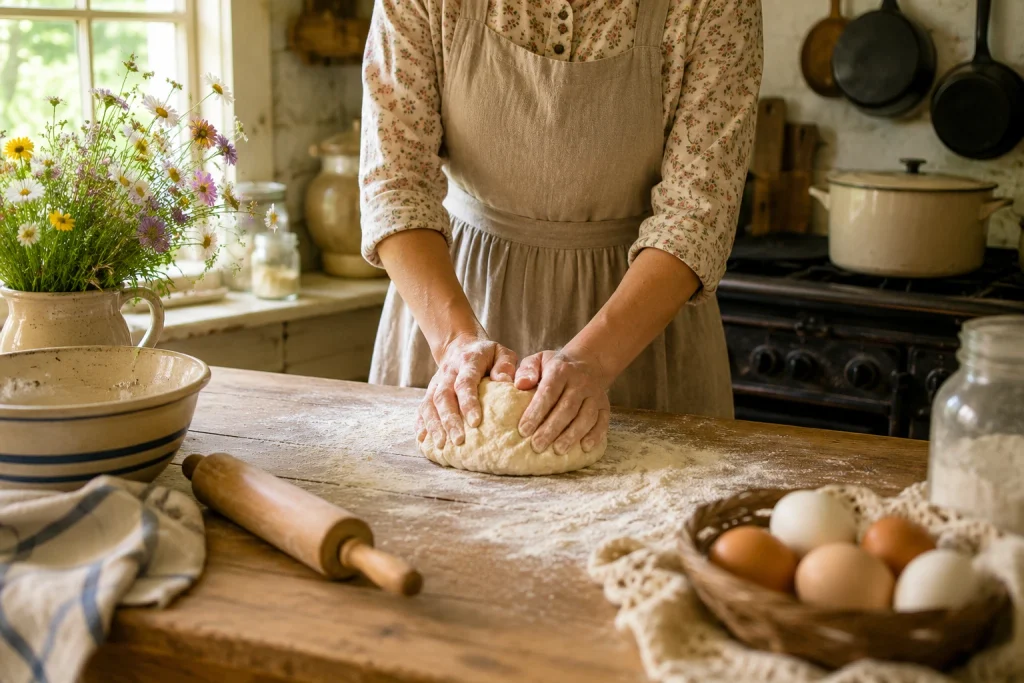
Modern life has made many everyday tasks so much easier and faster. We can buy bread already sliced, replace worn-out clothing with a few clicks, and find just about anything we need at the grocery store.
There’s a lot to appreciate about those conveniences.
But somewhere along the way, many practical skills that were once simply part of everyday life have started to slowly disappear.
Our grandparents and great-grandparents knew how to grow food, preserve a harvest, mend clothing, stretch a meal, and make useful things with their own hands. It’s true they often learned these skills because they had to, but that doesn’t mean they no longer have value.
Learning old-fashioned skills today isn’t about giving up modern life or trying to recreate some fairytale past.
It’s about becoming a little more capable, resourceful, and connected to the things we use every day.
Here are 25 old-fashioned skills worth learning again.
{Affiliate links included below}
1. Baking Bread From Scratch
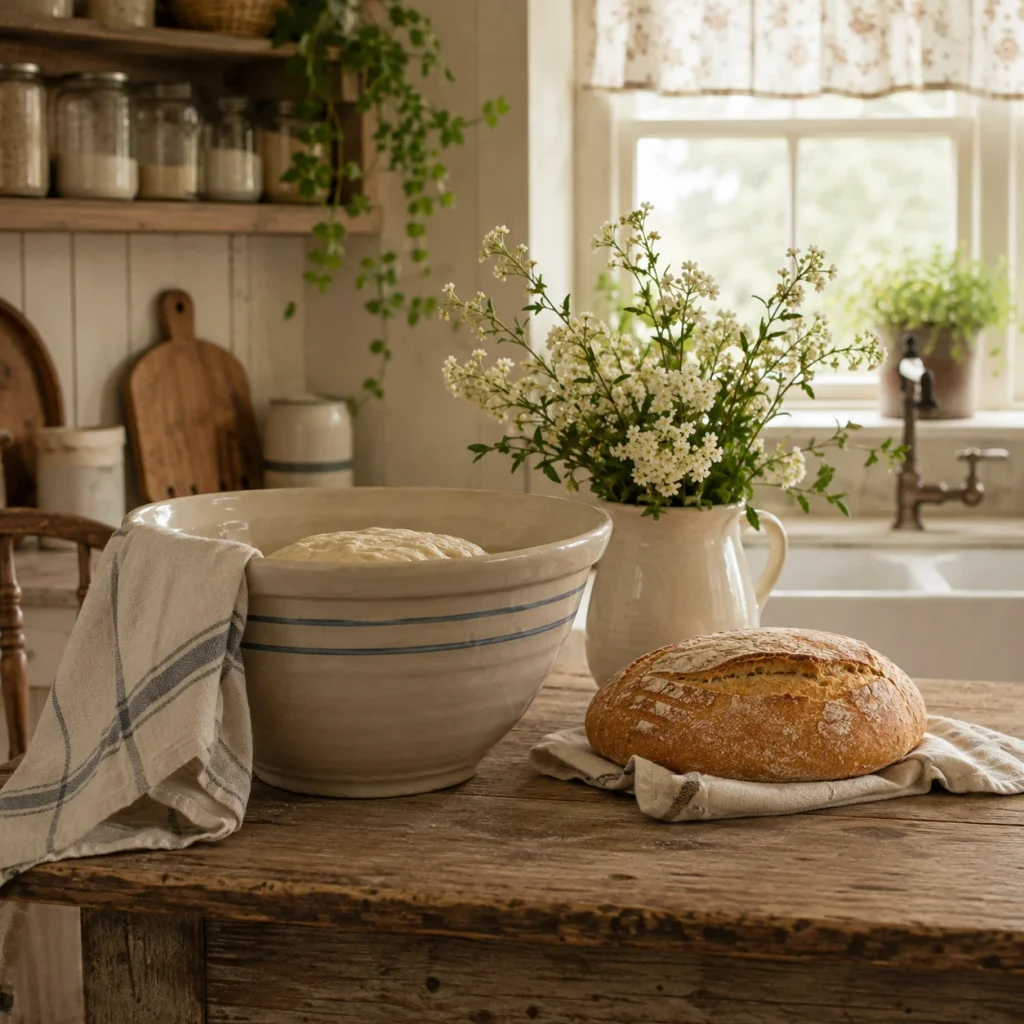
There was a time when knowing how to make a basic loaf of bread was an ordinary household skill.
Bread making can seem intimidating until you’ve done it a few times, but the basic ingredients couldn’t be simpler: flour, water, yeast or sourdough starter, and salt.
Learning to make bread also opens the door to biscuits, rolls, pizza dough, cinnamon rolls, and countless other homemade baked goods (a Dutch oven is perfect for homemade sourdough bread).
You certainly don’t have to bake every loaf your family eats. Just knowing that you can is a useful skill to have.
2. Growing a Vegetable Garden
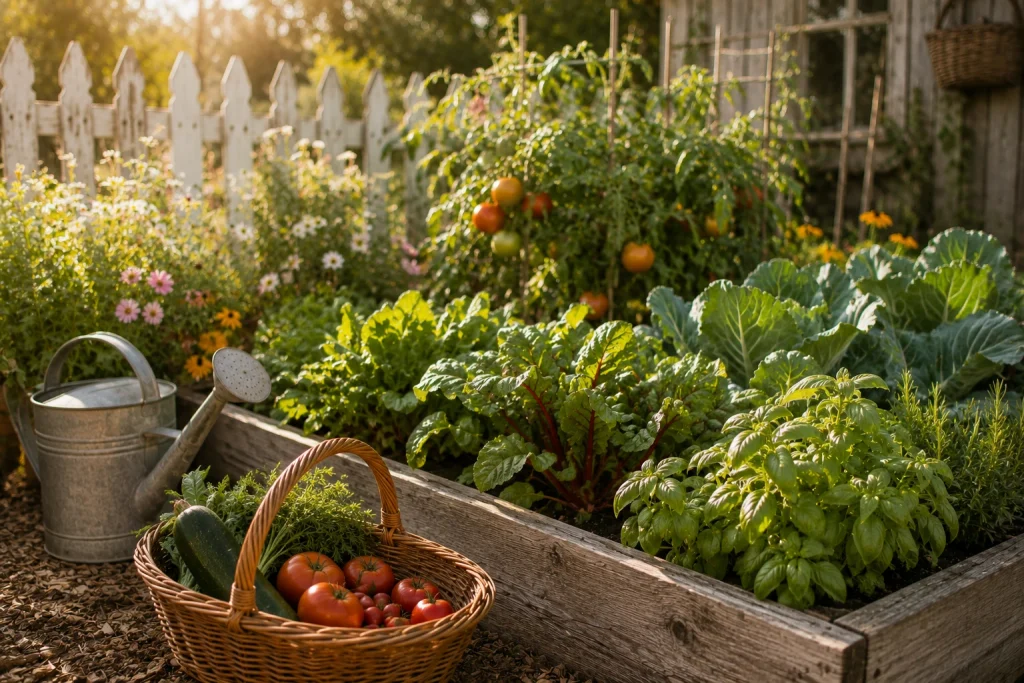
Few old-fashioned skills are as satisfying as growing something you can put on the dinner table.
And you don’t need acres of land to do it.
A small backyard plot, raised bed, or even several containers can produce tomatoes, peppers, lettuce, herbs, green beans, and other vegetables.
Gardening teaches patience, observation, and an appreciation for just how much work goes into producing our food.
3. Preserving Food
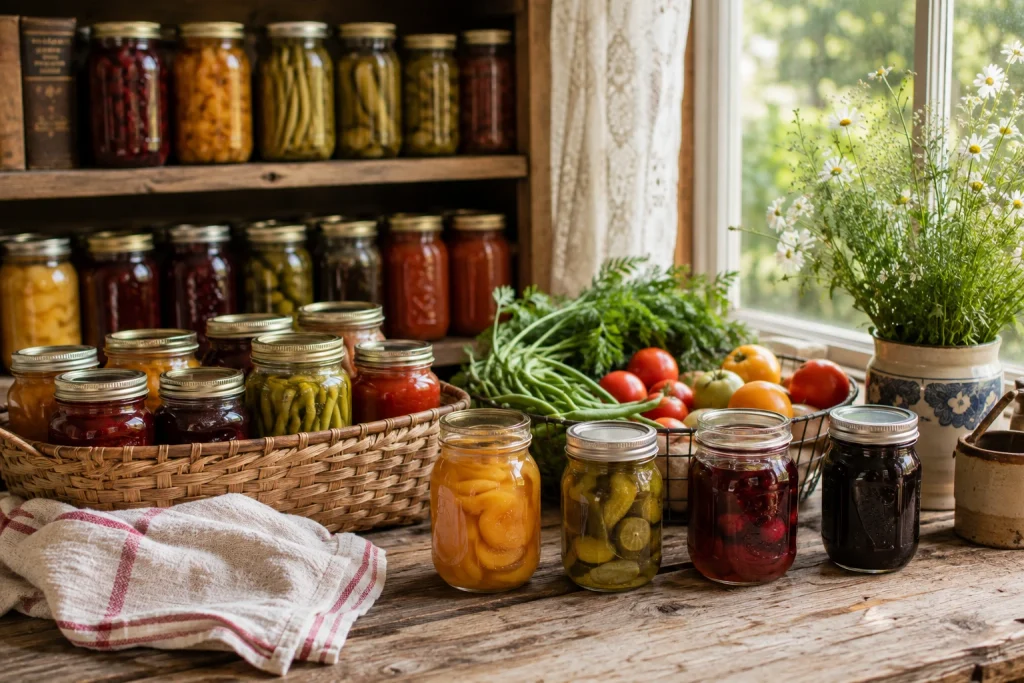
Before supermarkets offered produce year-round, preserving the harvest was an important part of preparing for the months ahead.
Canning with a pressure canner is probably the first method that comes to mind, but food preservation also includes freezing, drying, fermenting, pickling, and storing certain foods under the right conditions.
Learning even one or two preservation methods can help you take advantage of a productive garden, seasonal produce, or a particularly good sale.
If you’re new to canning, a basic canning tool set with a jar lifter, funnel, and headspace tool is an inexpensive place to start.
When canning, always use current, tested recipes and safe processing recommendations rather than relying on an old family method simply because it was done that way for generations.
4. Sewing on a Button
This might be one of the simplest forgotten skills of all.
A missing button doesn’t need to mean the end of a perfectly good shirt, coat, or pair of pants.
With a basic sewing kit and a few minutes, it can often be repaired.
It’s a tiny skill, but it’s a wonderful introduction to the old-fashioned habit of fixing something before replacing it.
5. Mending Clothes
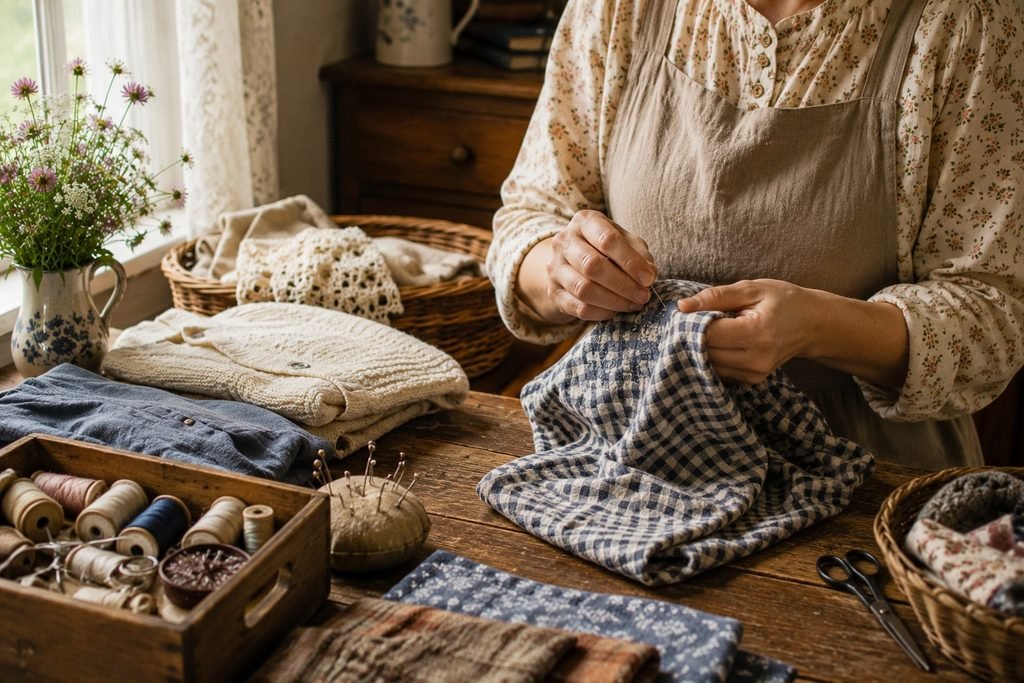
Once you’ve mastered a button, you can move on to basic mending.
Learn how to repair a small tear, fix a loose hem, patch a hole, or reinforce a worn area before it gets worse.
Our wardrobes may be larger than those of previous generations, but there’s still something satisfying about extending the life of clothing rather than automatically throwing it away.
6. Cooking From Basic Ingredients
Cooking from scratch doesn’t mean everything on your table has to be homemade.
It’s simply useful to know how to turn basic ingredients into a meal without depending entirely on boxes, mixes, and prepared foods.
Start with a handful of dependable meals you can make without much thought. Soups, roasted vegetables, casseroles, simple meat dishes, beans, rice, homemade sauces, and baked goods are all good places to begin.
7. Making Homemade Broth
Homemade broth is a perfect example of the resourcefulness found in an old-fashioned kitchen.
Chicken bones and vegetable scraps that might otherwise be discarded can become the foundation for soups, gravies, sauces, and other meals.
It’s easy to make broth in a stockpot, and a small way to get a little more use out of what you already have.
8. Hanging Laundry on a Clothesline
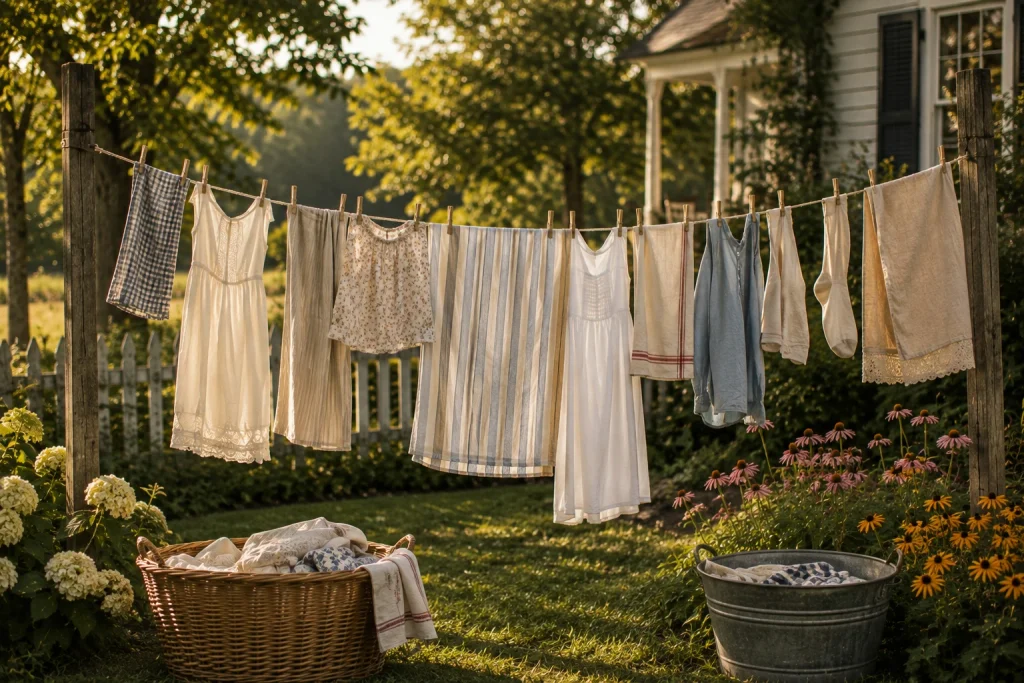
A clothesline requires more time than transferring a load of laundry into the dryer, but that’s partly the appeal.
There is something wonderfully simple about carrying a basket outside and hanging freshly washed sheets in the sunshine.
Line drying can also reduce energy use, and sunshine and fresh air don’t cost anything.
And it’s hard to beat the smell of sheets that have spent the afternoon drying outdoors.
A simple outdoor clothesline and sturdy clothespins are really all you need to get started.
9. Growing Herbs
If a large vegetable garden feels overwhelming, start with herbs.
Basil, parsley, thyme, rosemary, chives, dill, mint, and other herbs can be grown in relatively little space.
Fresh herbs add tremendous flavor to home cooking, and many can also be dried or frozen for later use.
A sunny windowsill, patio, or small corner of the garden may be all you need.
10. Starting Plants From Seed
Buying established plants is convenient, but starting your own plants from seed gives you many more varieties to choose from and can save money when you’re growing a larger garden.
It also turns gardening into something you can begin while winter is still hanging on outside.
Watching those first tiny green shoots emerge from the soil never seems to lose its charm.
11. Composting
Past generations didn’t necessarily call everything they did “sustainable.” Often, wasting useful materials simply didn’t make sense.
Composting follows that same philosophy.
Vegetable peelings, coffee grounds, leaves, grass clippings, and other organic materials can eventually become rich compost for the garden instead of going into the trash.
It’s a wonderfully practical example of turning something unwanted into something useful.
12. Making Jam and Jelly
A shelf filled with jars of homemade jam is one of those old-fashioned sights that still feels special.
Strawberries, blackberries, peaches, raspberries, grapes, and many other fruits can be transformed into preserves that capture a little bit of the season for later.
Homemade jam also makes a simple and thoughtful gift.
As with all home canning, be sure to follow a modern, tested recipe and current food-safety recommendations.
13. Keeping a Well-Stocked Pantry
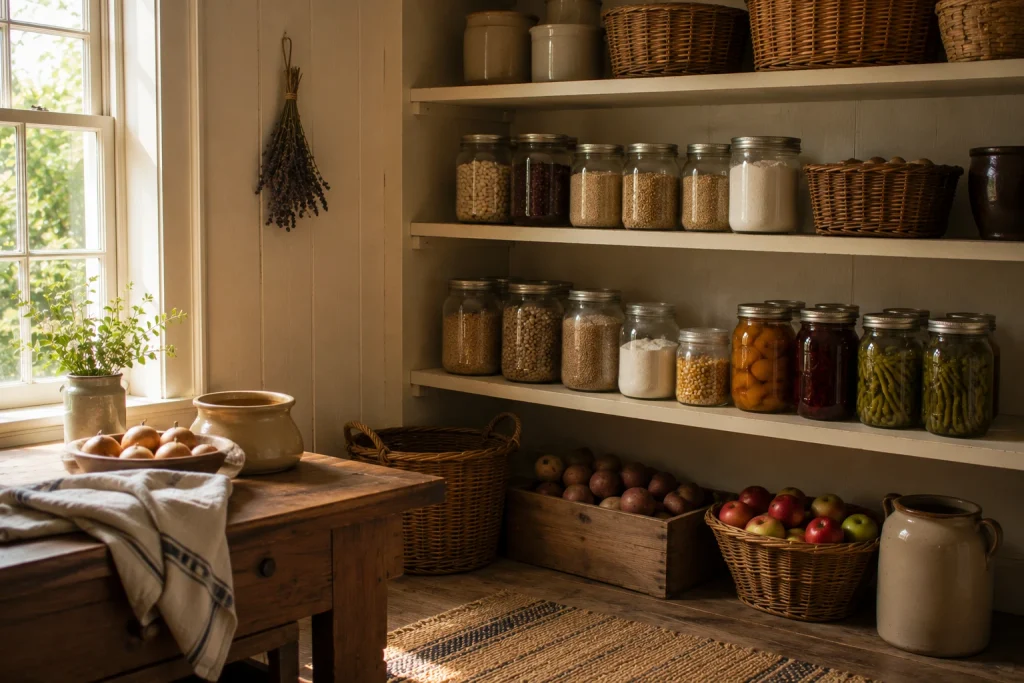
A useful pantry isn’t about accumulating enormous quantities of food.
It’s about keeping basic ingredients on hand so you can make meals without constantly running to the store.
Flour, sugar, oats, rice, pasta, dried or canned beans, canned tomatoes, broth, baking supplies, herbs, spices, and other staples give you countless possibilities.
Learning to cook from your pantry is a skill in itself.
14. Using Leftovers Creatively
Our grandmothers were often experts at turning yesterday’s dinner into today’s meal.
Roast chicken might become soup. Leftover vegetables could go into a casserole. Stale bread could become breadcrumbs, stuffing, or bread pudding.
Instead of thinking of leftovers as something that must simply be reheated, learn to see them as ingredients.
It’s good for the grocery budget and helps keep perfectly good food out of the trash.
15. Basic Hand Sewing
You don’t need to become an accomplished seamstress to benefit from knowing a few basic stitches.
Learn how to thread a needle, tie a secure knot, sew a straight stitch, make a simple repair, and finish the thread properly.
Those few skills can handle a surprising number of little household repairs.
16. Making Simple Household Cleaners
Many everyday cleaning jobs don’t require a cupboard filled with specialized products.
Simple ingredients such as vinegar, baking soda, dish soap, and hot water can handle plenty of household tasks when used appropriately.
Learning what works—and just as importantly, which cleaning ingredients should not be mixed—is a practical household skill worth knowing.
17. Caring for Cast Iron
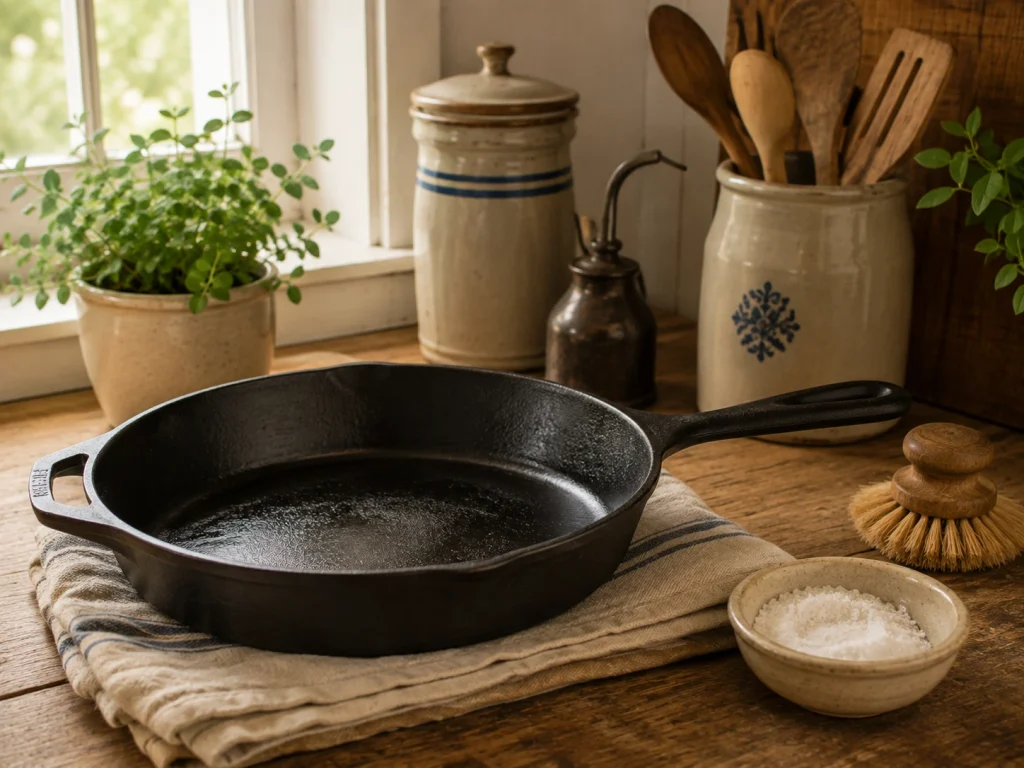
A good cast-iron skillet can last for generations when it’s cared for properly.
Learn how to cook with it, clean it without damaging the seasoning, dry it thoroughly, and maintain the cooking surface.
Cast iron is wonderfully suited to the old-fashioned philosophy of buying something useful and taking care of it for a long time.
18. Freezing Garden Produce
Not every harvest needs to go into a canning jar.
Freezing is one of the easiest ways to preserve many fruits and vegetables, making it an excellent skill for beginners.
Learning which foods need to be blanched first and how to package them properly can help you enjoy some of your garden long after the growing season has ended.
19. Making Pickles
Pickling is another traditional way to make the harvest last longer.
Cucumbers may be the classic choice, but many vegetables can be pickled in glass jars.
There are also refrigerator pickles for those who aren’t ready to venture into canning.
It’s a useful skill when the garden suddenly gives you more produce than you know what to do with.
20. Saving Seeds
For generations, gardeners saved seeds from one growing season to plant during the next.
Learning the basics of seed saving can make your garden more self-sufficient and help preserve varieties you particularly enjoy growing.
Start with easy-to-save seeds from open-pollinated plants such as beans, peas, lettuce, and tomatoes, then expand your knowledge as you gain experience.
21. Cooking With the Seasons
Modern grocery stores make it easy to forget that foods have seasons.
Learning to cook around what’s naturally abundant can bring variety to your kitchen while connecting your meals more closely to the time of year.
Spring might bring greens and asparagus. Summer gives us tomatoes, berries, and zucchini. Autumn brings apples, pumpkins, and winter squash.
There’s something comforting about looking forward to foods as their seasons return each year.
22. Making Gifts by Hand
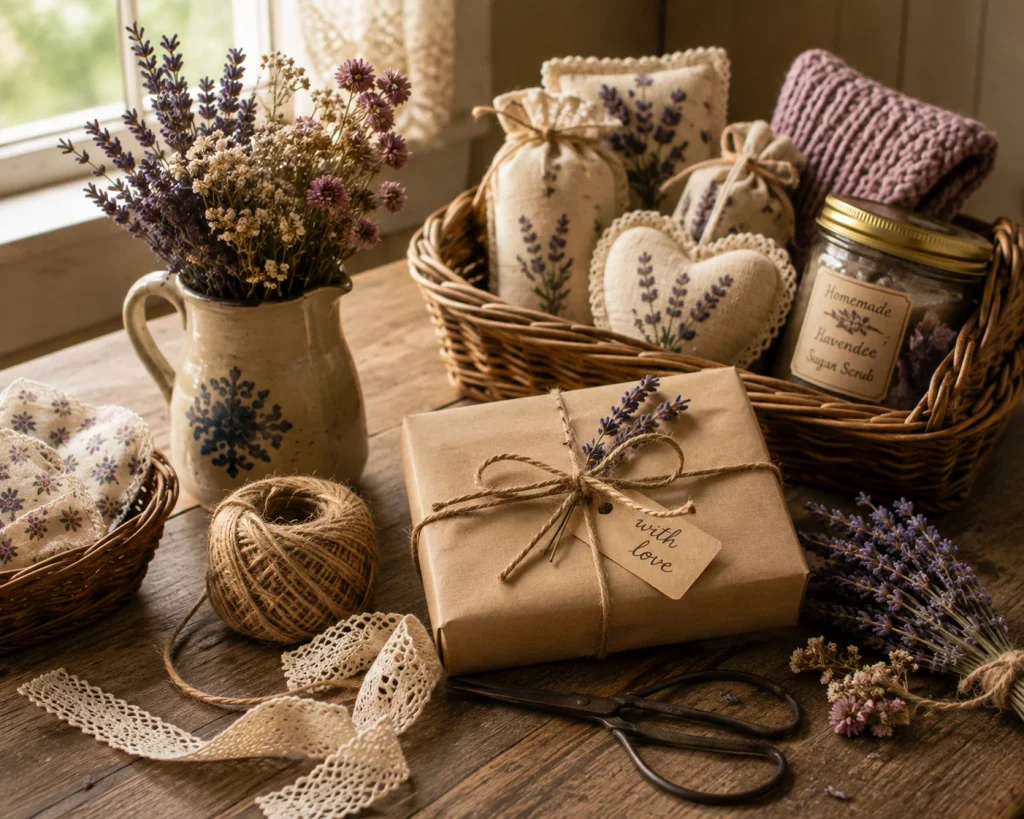
Not every meaningful gift needs to come from a store.
A jar of homemade jam, loaf of bread, knitted scarf, batch of cookies, sewn item, dried herb blend, or simple handmade ornament can mean far more than its monetary value.
The point isn’t to make every gift yourself. It’s simply to rediscover the pleasure of giving something that required your time and attention.
23. Storing Food Properly
Knowing how to store food may not sound particularly exciting, but it was once essential household knowledge.
Different foods last longer under different conditions. Knowing how to store potatoes, onions, winter squash, apples, herbs, bread, and pantry staples can reduce waste and make a harvest or grocery purchase last longer.
Sometimes resourcefulness is simply knowing how to take good care of what you already have.
24. Making Do With What You Have
This isn’t one particular skill so much as a way of thinking.
Before buying something new, ask whether you can repair what you have, repurpose something else, borrow what you need, or simply do without it.
That doesn’t mean never buying anything.
It means getting out of the habit of assuming that every problem requires another purchase.
Resourcefulness was an everyday necessity for many previous generations, and it’s a habit that can still serve us well.
25. Repairing Before Replacing
We’ve become accustomed to replacing things quickly.
But learning basic repairs—whether that’s tightening a loose chair, fixing a drawer, patching fabric, gluing something that has broken, or maintaining a favorite tool—can save money and keep useful belongings out of the trash.
You won’t be able to repair everything.
But asking “Can this be fixed?” before asking “What should I buy to replace it?” is an old-fashioned habit worth bringing back.
You Don’t Have to Learn Them All at Once
Looking at a list of 25 skills can make simple living seem like another enormous project to add to your life.
It doesn’t have to be.
Choose one thing that interests you.
Plant a few herbs. Learn to bake bread. Sew on a button. Hang a load of sheets outside. Make jam from summer berries. Learn how to take care of a cast-iron skillet.
Once that becomes familiar, learn something else.
The goal isn’t to prove that you can live without modern conveniences or do everything yourself. It’s to hold on to useful knowledge and become a little more capable of providing, creating, repairing, and making do.
Some old ways disappeared because better ways came along.
But some are simply too useful to forget.
Old-Fashioned Life Favorites
Looking for tools to help you learn these skills?
🏡Visit our favorite old-fashioned kitchen, garden, homemaking, and homesteading supplies.

You May Also Like